
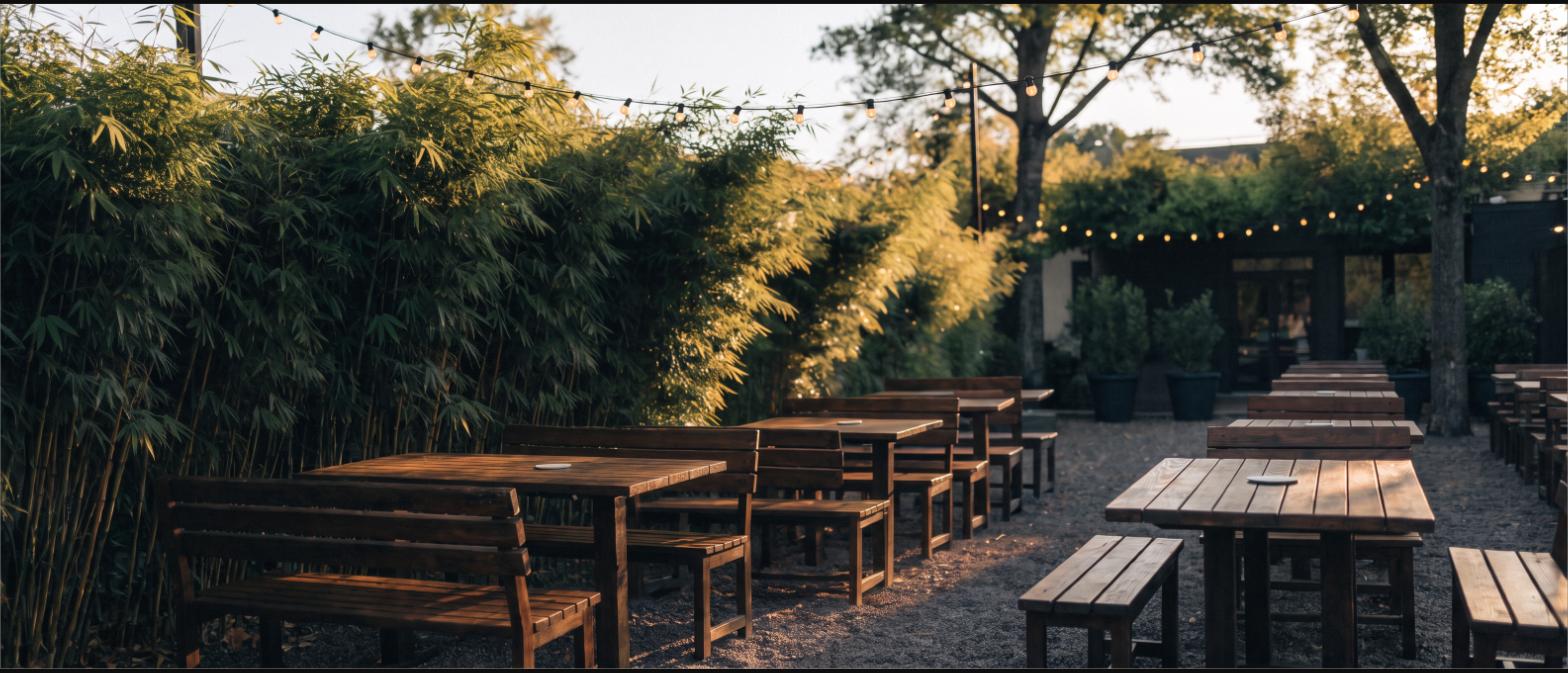
A patio only works when it feels enclosed. Whether it is a restaurant terrace backing onto a parking lot or a backyard dining area with a neighbor’s window looking straight into it, the thing that turns a slab of pavers into a room is a green wall on at least one side. Bamboo does that faster and taller than almost anything else you can plant.
It also has a reputation. Ask around and someone will tell you about bamboo coming up through a patio, under a fence and into a lawsuit. That story is almost always about one specific kind of bamboo.
Two very different plants, one name
Bamboo spreads underground through a rhizome, and there are two designs. Running bamboo has long, thin rhizomes that travel sideways, sometimes several feet in a single season, before sending up a cane somewhere you never planted one. Clumping bamboo has short, thick rhizomes that turn upward almost immediately, so every new cane emerges beside its parent.
The genus tells you which one you are buying. Phyllostachys, which covers golden, black and yellow groove bamboo, runs. Bambusa and Fargesia clump.
Why running bamboo ends up in the patio
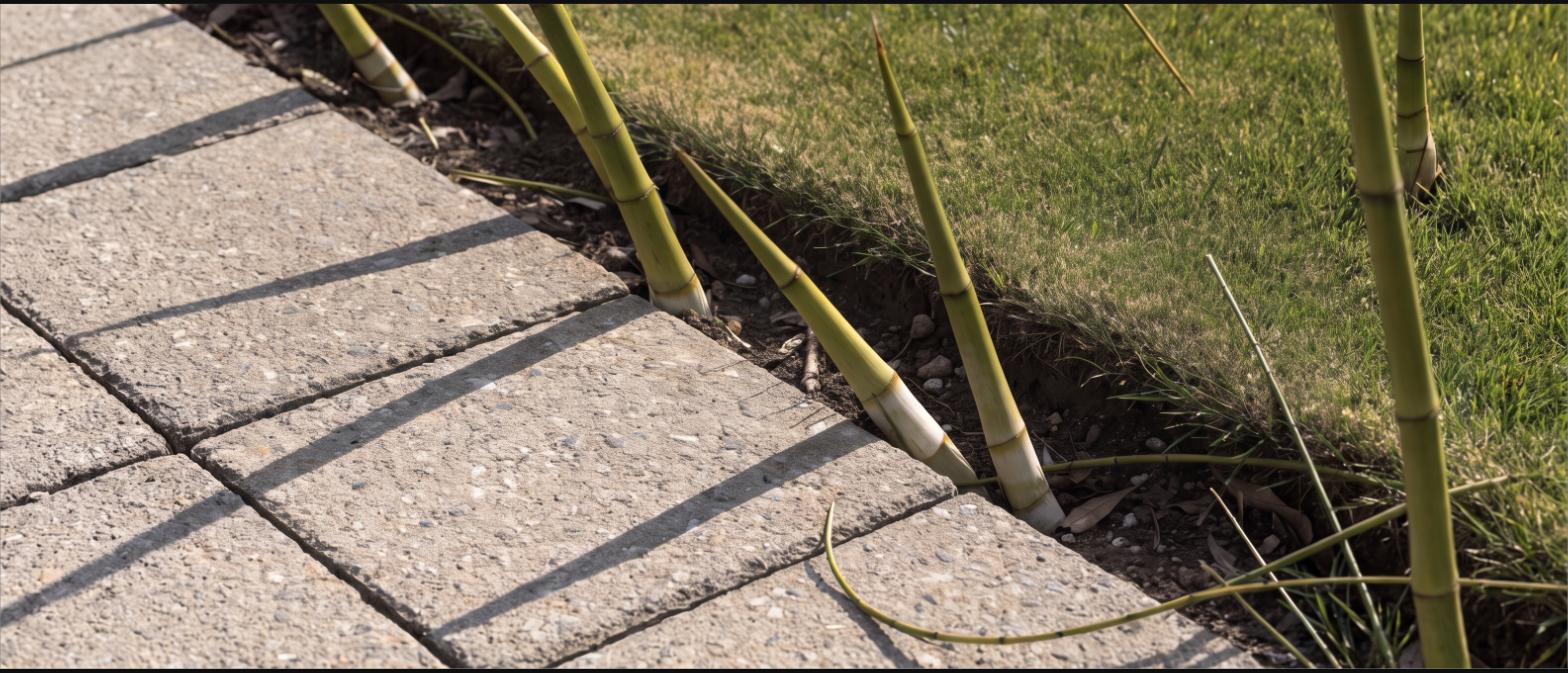
This is the failure mode, and it is expensive. A runner does not respect a paver joint, a fence line or a property boundary. Removal means excavating the rhizome mass and then returning for two or three seasons to cut down whatever resprouts, because any fragment left behind will regrow. For a restaurant that means a closed patio and a landscaping bill nobody budgeted for.
A number of municipalities have gone further and passed ordinances imposing setbacks or outright bans on new plantings. They almost always target running species specifically, so check your local code before anything goes in the ground.
What a clumper does instead
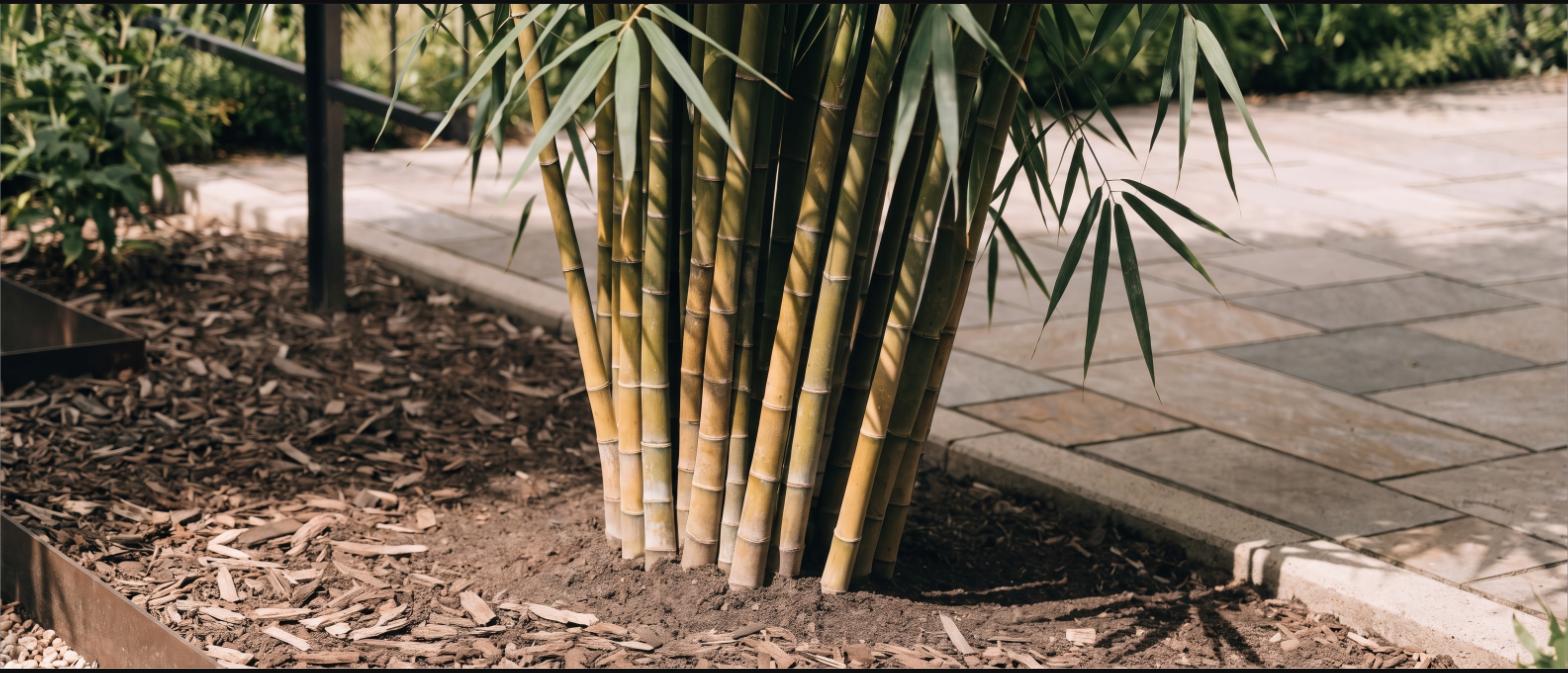
A clumping bamboo widens rather than travels, expanding roughly a few inches a year at the edge of the clump. A mature screening Bambusa occupies maybe three to six feet of ground for twenty-five feet of height, which is exactly why it works in the narrow strip between a patio and a fence where nothing else will. No root barrier required.
Privacy Planted’s guide to clumping vs running bamboo has the full rhizome breakdown, including the open clumpers that complicate the rule. Their footage below shows what a clumping screen actually becomes over nineteen months.
Choosing for a dining space
Buy by species name, not by the word on the label. “Clumping” on a tag is a marketing claim. Bambusa or Fargesia on the tag is a fact. Ask the nursery how far it spreads per year and expect an answer measured in inches.
In a warm zone, Bambusa gives you the height. In a colder one, Fargesia stays shorter but takes the winter without complaint.
The short version
Running bamboo travels. Clumping bamboo expands. For any dining space with a boundary close by, plant a clumper and spend the evening enjoying the patio instead of watching the paving.